
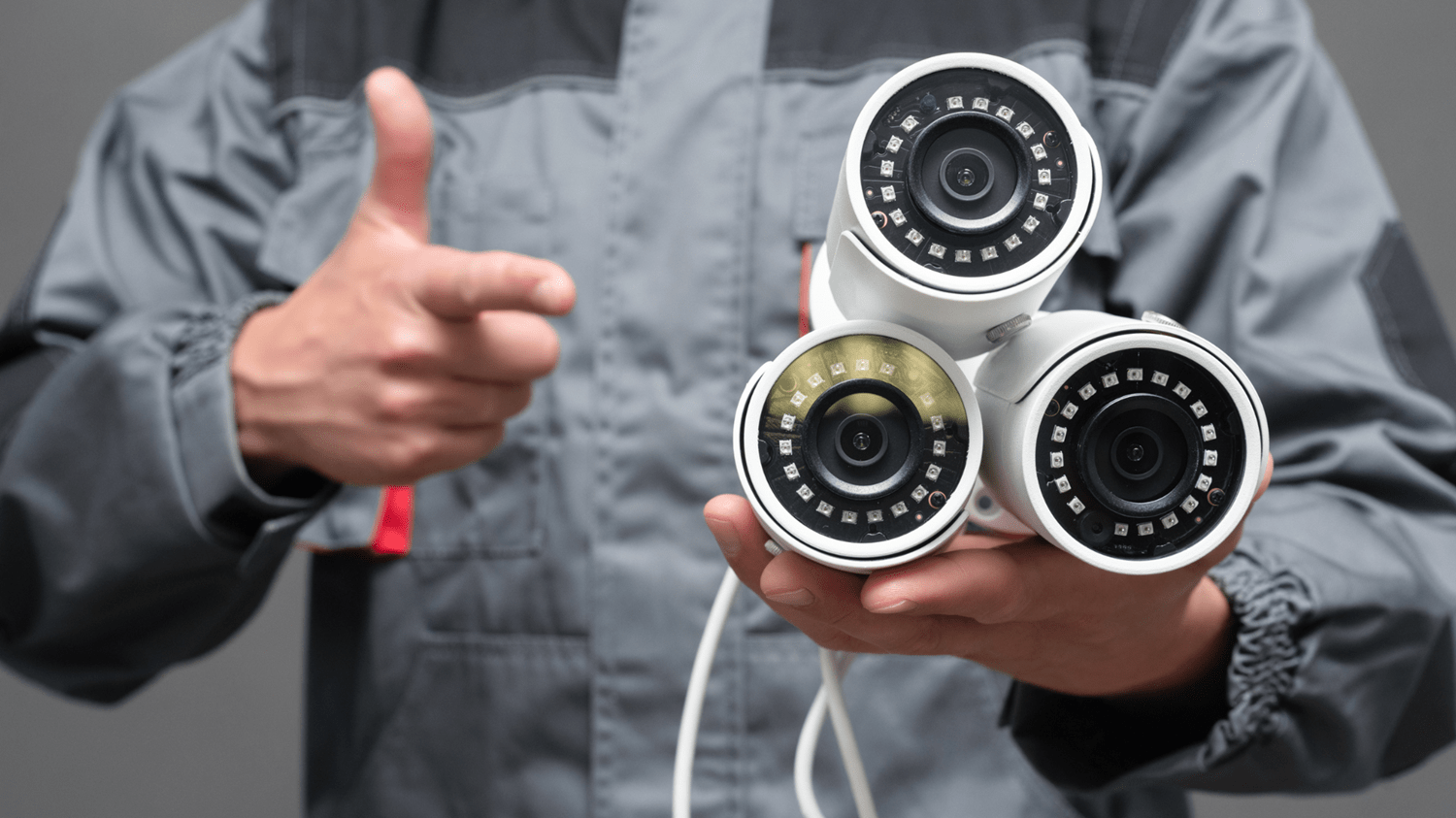
Why Industry Leaders Prefer AI CCTV for Industry
Time, accuracy, and safety in logistics and manufacturing are directly transformed into profit. Any delay, lost package, or safety failure is costly in terms of money, sometimes costlier than the hardware to avoid it. This is the reason why a new breed of CCTV vendors is cashing in: vendors providing AI-enabled surveillance platforms that go beyond video capture to provide real-time intelligence and operational value. With solutions such as AI CCTV for Industry, the entire value proposition becomes far more operational and business-focused.
This blog discusses the reasons logistics and manufacturing clients are moving towards AI-driven CCTV vendors, how such systems can deal with sector-specific issues, and the competitive benefits vendors will get by providing intelligent solutions.
The Industry Context: Why Traditional CCTV Falls Short
Conventional CCTV systems, being good at deterring and collecting evidence, find it difficult to keep up with the changing needs of contemporary factories and warehouses:
- Scale and complexity: Plants now occupy thousands of square metres and include a variety of moving parts – people, forklifts, pallets, autonomous vehicles. Monitoring manually is not sufficient.
- Real-time risk: Even a few seconds in seeing a hazard or production bottleneck can result in downtime, injury, or loss of inventory.
- Data overload: Hundreds of cameras make it like a needle in a haystack to locate any footage of relevance.
- Zero intersite visibility: Automation and AI filters make it hard to centralise management of multi-site video streams.
By integrating visual analytics and behaviour recognition, object tracking, and data integration, AI-powered CCTV changes this landscape and makes the cameras decision-making sensors. This shift reinforces the role of AI CCTV for Industry in high-performance operations.
Operational Visibility in Real Time with AI CCTV for Industry
AI cameras can detect, distinguish, and follow goods, vehicles, and individuals at the same time. This builds a digital twin of the work in a warehouse or an assembly line in the form of a visual map that is updated in real time.
How it helps clients:
- Reduced downtime: Spot idle machines, aisles, and stopped conveyors in real time.
- Enhanced logistics flow: Monitor inbound/outbound vehicle queue, optimise loading dock.
- Movement analytics of inventory: Identify pallets and containers using visual identifiers, dispatch or receipt cutting errors.
- Cross-site management: With AI dashboards, operations heads are able to oversee numerous warehouses at the same time, with anomalies automatically identified.
Such visibility is priceless to logistics clients under pressure to meet on-time-in-full (OTIF) rates of delivery.
Worker Safety and Compliance Monitoring
There are strict safety regulations in manufacturing environments. Most of what previously depended on human supervision is automated by AI-enabled CCTV.
Applications:
- Identify the presence of workers in restricted areas or those who work without protective equipment (helmets, gloves, vests).
- Identify unsafe behaviours (such as tailgating of forklifts, running over shop floors, or incorrect lifting up).
- Early detection of hazardous spills, fires, or smoke.
- Automatic alerts on the supervisors or shut-down protocols.
This is in addition to compliance and will help avoid expensive downtime, injuries, and compensations. It also creates auditable safety reports, which can prove compliance to both the regulators and insurance providers.
Theft, Shrinkage, and Asset Protection
While theft prevention is a classic CCTV use-case, AI analytics elevate it:
- Object removal alerts: Detect when high-value items leave storage without authorisation.
- Vehicle-plate recognition: Track trucks entering/exiting restricted gates, link to dispatch data.
- Behaviour detection: Flag loitering near sensitive areas, unusual after-hours movements.
- Anomaly recognition: Identify deviations from routine paths or time-patterns (e.g., forklift moving through unusual route at 2 AM).
These features deliver operational integrity and reinforce the capabilities of modern solutions like AI CCTV for Industry.
Quality Control and Process Monitoring
Quality requires precision in manufacturing. AI cameras will be able to follow production lines, identify abnormalities, and even promote remediation.
Example use-cases:
- Identifying flawed products through visual inspection (e.g. shape, colour, packaging anomalies).
- Checking the errors of calibration of robotic arms.
- Identifying parts shortages in assembly lines.
- Audit and continuous improvement recording process metrics.
In contrast to conventional inspection cameras that only recognized vision sensors, AI analytics interpret situations- what is normal and what is not normal according to learning patterns over time.
Productivity and Workforce Optimisation
AI converts CCTV data into efficient workforce analytics:
- Heatmaps demonstrate where the traffic is high, which helps to design the layout better.
- Time-motion analysis quantifies the time-wise average worker movement and idle time.
- Insights on shift patterns can illuminate the under-utilised areas or bottlenecks.
- Task-zone validation and attendance make sure that staff are where they are needed and enhance accountability.
This data, when linked to HR or production systems, leads to objective productivity gains, which is a powerful ROI story to operations directors.
Predictive Maintenance Through Visual Intelligence
AI-powered CCTV does not only observe, it foretells. Systems can raise red flags in the event of a breakdown or anomaly by studying trends in the behaviour of machines, motion, and surroundings:
- Vibration or heat detection by visual analysis and IR synthesis.
- Determining conveyor malfunction or misalignment of assembly.
- Warnings when the maintenance areas are open and there is no technician around – eliminating danger.
This predictive visibility minimizes unplanned downtime and extends asset life – very important in a manufacturing facility where each minute of downtime costs thousands.
Integration with IoT and ERP Ecosystems
Logistics and manufacturing clients prefer AI-enabled CCTV partners because these systems integrate seamlessly with their digital infrastructure.
Integration points:
- IoT Sensors: Combine visual data with temperature, humidity, and machine-health data for holistic monitoring.
- ERP Systems: Sync video events with order fulfilment, asset tracking, and production logs.
- Fleet-management platforms: Tie vehicle movement analytics with GPS data for end-to-end logistics visibility.
- Access Control: Automate entry/exit permissions through face or plate recognition.
This unified ecosystem supports smarter decisions and automates manual checkpoints — aligning security with operations efficiency.
Data-Driven Decision Making and Reporting
AI video analytics transform raw video into data that is searchable. The cameras provide KPIs to operations managers: throughput, cycle time, dock utilisation, safety incidents, average response time.
This sort of quantification makes CCTV a business intelligence tool rather than a cost centre. It also enables continuous improvement via trend dashboards, and AI-enabled CCTV has become an indispensable part of the modern factories.
Sustainability and Energy Optimisation
Every watt counts in manufacturing, which is energy-intensive. Intelligent CCTV helps to achieve sustainability by:
- Identifying equipment left unshut at night.
- Tracking occupancy-based lighting and HVAC.
- Detecting leakage or energy inefficient behaviours.
- It allows the management of facilities remotely to cut down on traveling emissions by inspection personnel.
These AI insights are in line with ESG objectives – a key purchase consideration among large industrial clients.
Why Clients Prefer Partners, Not Vendors
AI-enabled CCTV solutions are not plug-and-play. They require continuous tuning, model updates, data governance, and integration support. That’s why clients increasingly look for long-term partners, not transactional camera suppliers.
What “partner” means to clients:
- Consultative approach: Understanding unique workflows before prescribing solutions.
- Customisation: Designing analytics that fit the environment — warehouse, cold-chain, assembly line, or refinery.
- Continuous model training: Refining analytics accuracy as site conditions change.
- Data governance & privacy compliance: Ensuring lawful use and secure storage.
- Reporting & support: Providing monthly analytics reports, audits, and uptime guarantees.
Partnership builds trust, while AI capability builds efficiency — together they create sustainable competitive advantage.
ROI Metrics That Matter to Logistics and Manufacturing Clients
Clients evaluate AI-CCTV investments not by camera count but by outcomes. Key performance indicators include:
| Metric | Typical Outcome from AI-CCTV |
| Theft and loss incidents | ↓ 30–50 % |
| Workplace accidents | ↓ 20–40 % |
| Production downtime | ↓ 25–35 % |
| Manual monitoring cost | ↓ up to 60 % |
| Inventory accuracy | ↑ 20–30 % |
| Delivery efficiency (OTIF) | ↑ 15–25 % |
| ROI timeframe | 12–18 months average |
| Metric | Typical Outcome from AI-CCTV |
These tangible business metrics make AI-enabled surveillance an operational investment rather than a compliance expense.
Regional Outlook: India and Emerging Economies
In markets like India, Southeast Asia and the Middle East, demand for AI-enabled CCTV in logistics and manufacturing is rising due to:
- Expansion of industrial corridors, smart warehouses and Make-in-India facilities.
- Labour-intensive operations that benefit from automation in safety monitoring.
- Increasing digitalisation (IoT, Industry 4.0) that creates synergy with AI video analytics.
- Government safety mandates and ESG adoption in export-driven factories.
Localised AI partners — who understand environmental conditions, languages, and regulatory nuances — have a strong edge over global generic providers.
Challenges and How Top Partners Overcome Them
Even with strong value propositions, adoption can face hurdles:
| Challenge | Smart Partner Response |
| Low internet bandwidth | Deploy edge-AI cameras for on-device inference, compress metadata to cloud. |
| Harsh industrial environments | Use ruggedised cameras with thermal & dust resistance, IP66/IP67 ratings. |
| Workforce resistance | Run transparency & training programmes to highlight safety benefits. |
| Cost sensitivity | Offer modular analytics packages and pay-as-you-grow licensing. |
| Privacy and legal compliance | Implement masking, anonymisation, secure data retention, audit trails. |
The best AI-CCTV partners handle these not as afterthoughts, but as design principles.
The Strategic Advantage for Vendors
Industrial CCTV goes forward at the crossroads of AI, robotics, and predictive automation:
- Surveillance robots will be used to monitor peripheries and factory floors.
- Multimodal analytics will integrate video, sound, and sensor information to identify anomalies at even an earlier stage.
- Intelligent rerouting of footage by self-healing networks will prevent down times.
- Federated learning will enable AI models to be enhanced across locations without violating data privacy.
Clients will turn to providers capable of applying technologies like AI CCTV for Industry to solve real-world operational needs.
Conclusion
In the case of logistics and manufacturing customers, the move towards AI-enabled CCTV partners is not just a technological one, but is also a strategic one. They require partners that will make surveillance a competitive edge: reduce losses, enhance safety, streamline workflow, anticipate disruptions and prevent them before they happen.
To the vendors, it is a call to transform – not to sell cameras but sell intelligence. The individuals who adopt AI collaboration, domain customisation, and enhanced improvement will spearhead the coming decade of industrial security and analytics on operations.